
The best restaurants for groups in Manila

Manila‘s dining scene is one of Southeast Asia’s most energized — a city where Argentine parrillas sit alongside MICHELIN-recognized yakitori bars, premium wagyu counters, and Filipino heirloom kitchens rooted in generations of regional cooking. Whatever the occasion — a birthday blowout, a corporate celebration, a long overdue reunion — finding the best restaurants for groups in Manila means navigating an exciting and varied landscape. From the gleaming restaurant corridors of Makati and Bonifacio Global City to the neighborhood bistros of Quezon City and the bayfront sprawl of Pasay, Metro Manila delivers for every group size, every budget, and every craving.
Explore the best restaurants for groups in Manila, and book on OpenTable.
Chef Rosebud Benitez-Velasco’s three-story restaurant along Katipunan Extension in Quezon City is built for long, unhurried tables. The space channels upscale home dining — warm light, comfortable lounge seating — anchored by a 20-seater private dining room ideal for intimate celebrations. Every table kicks off with a welcome drink before the kitchen’s standout plates arrive. The signature steak salpicao delivers generous chunks of butter-aged ribeye in a deep umami glaze, while the miso truffle cream pasta — penne in brown butter cream with caramelized mushrooms and bacon crisps — is a crowd-pleaser that disappears fast. The prosciutto and fig flatbread, finished with a truffle maple glaze, handles the sharing instinct well, and the calamansi tart offers a bright, palate-resetting close. Cocktails, including a tableside-smoked tamari old fashioned, make it just as compelling for evening group dining as it is for brunch.
Chef Rosebud Benitez-Velasco’s three-story restaurant along Katipunan Extension in Quezon City is built for long, unhurried tables. The space channels upscale home dining — warm light, comfortable lounge seating — anchored by a 20-seater private dining room ideal for intimate celebrations. Every table kicks off with a welcome drink before the kitchen’s standout plates arrive. The signature steak salpicao delivers generous chunks of butter-aged ribeye in a deep umami glaze, while the miso truffle cream pasta — penne in brown butter cream with caramelized mushrooms and bacon crisps — is a crowd-pleaser that disappears fast. The prosciutto and fig flatbread, finished with a truffle maple glaze, handles the sharing instinct well, and the calamansi tart offers a bright, palate-resetting close. Cocktails, including a tableside-smoked tamari old fashioned, make it just as compelling for evening group dining as it is for brunch.
Rustic wooden furnishings, vintage photographs, and the occasional live tango performance set the stage at this Makati outpost of Buenos Aires’ celebrated Parrilla La Cabrera. Brought to the Philippines by Carlo Calma Lorenzana and his wife Julia Quisumbing after falling for the original on their honeymoon in Argentina, the restaurant’s lead philosophy is refreshing in its simplicity: premium meats grilled over wooden charcoal with nothing but salt. Founded by chef Gastón Riveira, La Cabrera’s Manila operation is overseen by head chef Jonathan Mancenido, who trained in Buenos Aires to ensure each plate holds to the original’s standards. Signature cuts — ojo de bife, entraña, and bife de chorizo — arrive with unlimited hot and cold side dishes. Alfajores and chocotorta close the meal. The main dining room accommodates 50 to 60 guests, and the full space handles up to 80 to 90, making it a genuine contender for Manila’s best large-group restaurant for a special occasion.
Rustic wooden furnishings, vintage photographs, and the occasional live tango performance set the stage at this Makati outpost of Buenos Aires’ celebrated Parrilla La Cabrera. Brought to the Philippines by Carlo Calma Lorenzana and his wife Julia Quisumbing after falling for the original on their honeymoon in Argentina, the restaurant’s lead philosophy is refreshing in its simplicity: premium meats grilled over wooden charcoal with nothing but salt. Founded by chef Gastón Riveira, La Cabrera’s Manila operation is overseen by head chef Jonathan Mancenido, who trained in Buenos Aires to ensure each plate holds to the original’s standards. Signature cuts — ojo de bife, entraña, and bife de chorizo — arrive with unlimited hot and cold side dishes. Alfajores and chocotorta close the meal. The main dining room accommodates 50 to 60 guests, and the full space handles up to 80 to 90, making it a genuine contender for Manila’s best large-group restaurant for a special occasion.

Osaka’s only MICHELIN Bib Gourmand-recognized yakitori restaurant has planted its first international flag in BGC’s High Street South, and it’s well worth the trip. Founded by chef Masashi Hara, Ikoka has earned the Bib Gourmand distinction for five consecutive years through a commitment to simplicity and craft. Each skewer is grilled over binchotan — a premium Japanese charcoal known for its clean, odorless burn — and seasoned with either salt or the restaurant’s proprietary tare sauce. The negima (chicken thigh and scallion), cheese tsukune, and soriresu (chicken oyster) are reliable standouts, each showcasing the precision behind the grill. Semi-private rooms are available for groups seeking a more intimate setting. Watching each skewer shaped and cooked by hand by Japanese grill masters is an experience in itself — part meal, part craft demonstration.
Osaka’s only MICHELIN Bib Gourmand-recognized yakitori restaurant has planted its first international flag in BGC’s High Street South, and it’s well worth the trip. Founded by chef Masashi Hara, Ikoka has earned the Bib Gourmand distinction for five consecutive years through a commitment to simplicity and craft. Each skewer is grilled over binchotan — a premium Japanese charcoal known for its clean, odorless burn — and seasoned with either salt or the restaurant’s proprietary tare sauce. The negima (chicken thigh and scallion), cheese tsukune, and soriresu (chicken oyster) are reliable standouts, each showcasing the precision behind the grill. Semi-private rooms are available for groups seeking a more intimate setting. Watching each skewer shaped and cooked by hand by Japanese grill masters is an experience in itself — part meal, part craft demonstration.
Facing Manila Bay at the North Wing of SM Mall of Asia in Pasay, TGI Fridays has earned its reputation as one of the most reliably festive group dining venues in Metro Manila. The interior leans fully into its personality: movie posters, life-size figures, and pop-culture memorabilia covering every wall. As The Bistro Group’s flagship brand and the first casual dining restaurant to open in the Philippines, the MOA branch has been packing in groups for decades. The shareable platters anchor the experience — the signature platter combines a full rack of baby back ribs with boneless grilled chicken, onion rings, baked mac and cheese, and buttered corn. The al fresco section faces the bay, turning cocktail pitchers into an obvious accompaniment to the view. For easy, crowd-pleasing group dining in Manila that handles everyone from kids to cocktail drinkers, Fridays delivers.
Facing Manila Bay at the North Wing of SM Mall of Asia in Pasay, TGI Fridays has earned its reputation as one of the most reliably festive group dining venues in Metro Manila. The interior leans fully into its personality: movie posters, life-size figures, and pop-culture memorabilia covering every wall. As The Bistro Group’s flagship brand and the first casual dining restaurant to open in the Philippines, the MOA branch has been packing in groups for decades. The shareable platters anchor the experience — the signature platter combines a full rack of baby back ribs with boneless grilled chicken, onion rings, baked mac and cheese, and buttered corn. The al fresco section faces the bay, turning cocktail pitchers into an obvious accompaniment to the view. For easy, crowd-pleasing group dining in Manila that handles everyone from kids to cocktail drinkers, Fridays delivers.
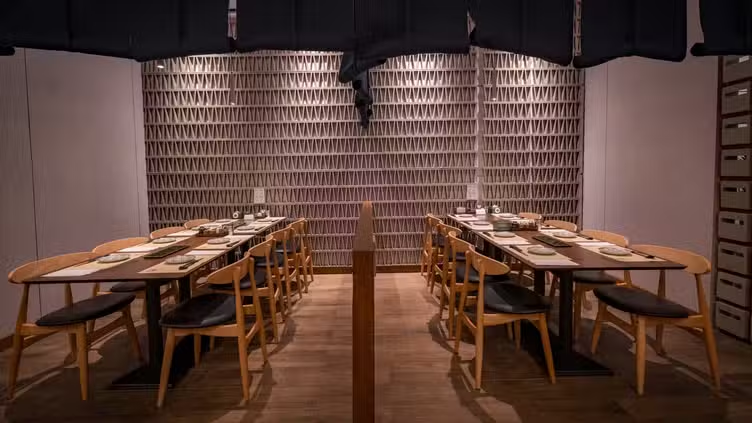
The name Sudaku is drawn from an old Japanese word meaning “to come together” — a fitting foundation for one of Makati’s most compelling group dining destinations. Brought to the Philippines from Shiga Prefecture, Japan by the Vikings Group, Yakiniku Sudaku is centered on Omi beef, one of Japan’s three most prized wagyu brands, sourced from contracted farms. The private tatami rooms — furnished with traditional floor seating and slippers — are among the city’s finest spaces for a special-occasion dinner, while the main dining room comfortably handles larger groups. The A5 Omi Wagyu Monument Moriawase, a seven-cut platter designed for six to eight diners, is the group order of choice; hanetsuki wagyu gyoza, chawanmushi, and A5 Omi Wagyu tartare fill out the table. Service follows the omotenashi philosophy, anticipating each need before it’s voiced.
The name Sudaku is drawn from an old Japanese word meaning “to come together” — a fitting foundation for one of Makati’s most compelling group dining destinations. Brought to the Philippines from Shiga Prefecture, Japan by the Vikings Group, Yakiniku Sudaku is centered on Omi beef, one of Japan’s three most prized wagyu brands, sourced from contracted farms. The private tatami rooms — furnished with traditional floor seating and slippers — are among the city’s finest spaces for a special-occasion dinner, while the main dining room comfortably handles larger groups. The A5 Omi Wagyu Monument Moriawase, a seven-cut platter designed for six to eight diners, is the group order of choice; hanetsuki wagyu gyoza, chawanmushi, and A5 Omi Wagyu tartare fill out the table. Service follows the omotenashi philosophy, anticipating each need before it’s voiced.
Six floors above Ortigas Center at The Podium, Brotzeit’s rooftop space is Manila’s closest approximation of a Bavarian bier garden. This Singapore-born brand has been a fixture in the Philippine market since 2013, and the Podium branch serves as its flagship — communal long tables, leather benches, wood paneling, and al fresco terracing make it a natural home for groups. Crispy pork knuckle, a rotating lineup of German sausages, schnitzels, and warm pretzels arrive in generous portions designed for sharing. The beer selection runs the full spectrum of German brewing tradition, from crisp Pilsners to velvety dark stouts, poured in formats from slim Pilsner glasses to towering one-liter mugs. An annual Oktoberfest celebration runs across nearly two months, transforming the space into one of Metro Manila’s most spirited group dining venues.
Six floors above Ortigas Center at The Podium, Brotzeit’s rooftop space is Manila’s closest approximation of a Bavarian bier garden. This Singapore-born brand has been a fixture in the Philippine market since 2013, and the Podium branch serves as its flagship — communal long tables, leather benches, wood paneling, and al fresco terracing make it a natural home for groups. Crispy pork knuckle, a rotating lineup of German sausages, schnitzels, and warm pretzels arrive in generous portions designed for sharing. The beer selection runs the full spectrum of German brewing tradition, from crisp Pilsners to velvety dark stouts, poured in formats from slim Pilsner glasses to towering one-liter mugs. An annual Oktoberfest celebration runs across nearly two months, transforming the space into one of Metro Manila’s most spirited group dining venues.
As the Philippines’ first high-end Chinese hotpot restaurant, Good Luck Hot Pot in Pasay is as much spectacle as it is dinner. The ornate interior — aquarium displays, VIP rooms, costume photo stations — announces that this is an event, not just a meal. Live cultural performances add to the festive rhythm of the evening. Each diner receives their own individual pot and a choice of broth: spicy butter, fresh tomato, mushroom, or a seafood-forward option. The spread scales with group size, with surf-and-turf platters and sashimi selections calibrated to the number of guests at the table. Curated set menus for parties of four to 10 simplify the planning, with complimentary gifts tied to group size. For large group dining in Manila with an immersive cultural edge, this Pasay restaurant is hard to top.
As the Philippines’ first high-end Chinese hotpot restaurant, Good Luck Hot Pot in Pasay is as much spectacle as it is dinner. The ornate interior — aquarium displays, VIP rooms, costume photo stations — announces that this is an event, not just a meal. Live cultural performances add to the festive rhythm of the evening. Each diner receives their own individual pot and a choice of broth: spicy butter, fresh tomato, mushroom, or a seafood-forward option. The spread scales with group size, with surf-and-turf platters and sashimi selections calibrated to the number of guests at the table. Curated set menus for parties of four to 10 simplify the planning, with complimentary gifts tied to group size. For large group dining in Manila with an immersive cultural edge, this Pasay restaurant is hard to top.
Named after his grandmother, Lola Norma — the family matriarch whose Filipino-Spanish cooking inspired him to leave a career in medicine for the kitchen — founder Raven P. Tan-chen opened this San Juan restaurant with co-founder Benlorenz G. Zabala as a tribute to heirloom recipes passed down by hand. The menu carries those origins directly: sopa de Norma is a slow-cooked comfort soup built on beef short rib, rice, and vegetables, originally prepared for Lola Norma’s seven children; iberian chicken comes braised with potatoes, carrots, and mushrooms; and paella negra anchors the table for larger groups. The chicharrones and pulpo make compelling starters, while steak and frites — featuring a wagyu flank with thrice-cooked fries — brings a refined edge to the comfort-driven lineup. For Spanish-Filipino group dining in Manila rooted in personal culinary history, Norma is a warm and welcoming destination.
Named after his grandmother, Lola Norma — the family matriarch whose Filipino-Spanish cooking inspired him to leave a career in medicine for the kitchen — founder Raven P. Tan-chen opened this San Juan restaurant with co-founder Benlorenz G. Zabala as a tribute to heirloom recipes passed down by hand. The menu carries those origins directly: sopa de Norma is a slow-cooked comfort soup built on beef short rib, rice, and vegetables, originally prepared for Lola Norma’s seven children; iberian chicken comes braised with potatoes, carrots, and mushrooms; and paella negra anchors the table for larger groups. The chicharrones and pulpo make compelling starters, while steak and frites — featuring a wagyu flank with thrice-cooked fries — brings a refined edge to the comfort-driven lineup. For Spanish-Filipino group dining in Manila rooted in personal culinary history, Norma is a warm and welcoming destination.
The trapezoidal archway at the entrance of this Poblacion restaurant gives the first hint of what’s inside: a 70-seat dining room dressed in wooden elements and earthy pastels, with a centerpiece communal table that accommodates up to 16 guests and a private dining room for up to 20. A Notorious Concepts restaurant, Japonesa blends the bold citrus and spice of Peruvian cuisine with the refined technique of Japanese cooking — fresh seafood preparations carry the brightness of a ceviche sensibility, while grilled and plated proteins are touched with Japanese precision. The bar program matches the kitchen’s ambition, running from a classic pisco sour to sake-based cocktails infused with tropical fruits. Few restaurants in Makati give a large group this much to work through across multiple visits, let alone a single evening.
The trapezoidal archway at the entrance of this Poblacion restaurant gives the first hint of what’s inside: a 70-seat dining room dressed in wooden elements and earthy pastels, with a centerpiece communal table that accommodates up to 16 guests and a private dining room for up to 20. A Notorious Concepts restaurant, Japonesa blends the bold citrus and spice of Peruvian cuisine with the refined technique of Japanese cooking — fresh seafood preparations carry the brightness of a ceviche sensibility, while grilled and plated proteins are touched with Japanese precision. The bar program matches the kitchen’s ambition, running from a classic pisco sour to sake-based cocktails infused with tropical fruits. Few restaurants in Makati give a large group this much to work through across multiple visits, let alone a single evening.
For celebrity chef Myke “Tatung” Sarthou — a multiple Gourmand World Cookbook Award winner and founder of the SIMPOL platform — Tatung’s at Gateway Mall 2 in Cubao is the restaurant he has spent a career working toward. Built around the tagline “Home, Remembered,” every dish is an act of culinary inheritance: kinilaw made with sukang tuba and biasing limes from Mindanao opens the table; whole pampano braised in coconut milk (his Lola Juanita’s recipe) and twice-cooked humba (his Lola Natividad’s pork belly, crisped then braised) anchor the main spread. Dishes arrive family-style, designed to serve three to four, with the elegant dining room — crystal goblets, solihiya chairs, soft chandelier light — lending the meal a sense of occasion. A VIP room is available for private group events. For the best Filipino group dining in Manila, Tatung’s makes a compelling and deeply personal case.
For celebrity chef Myke “Tatung” Sarthou — a multiple Gourmand World Cookbook Award winner and founder of the SIMPOL platform — Tatung’s at Gateway Mall 2 in Cubao is the restaurant he has spent a career working toward. Built around the tagline “Home, Remembered,” every dish is an act of culinary inheritance: kinilaw made with sukang tuba and biasing limes from Mindanao opens the table; whole pampano braised in coconut milk (his Lola Juanita’s recipe) and twice-cooked humba (his Lola Natividad’s pork belly, crisped then braised) anchor the main spread. Dishes arrive family-style, designed to serve three to four, with the elegant dining room — crystal goblets, solihiya chairs, soft chandelier light — lending the meal a sense of occasion. A VIP room is available for private group events. For the best Filipino group dining in Manila, Tatung’s makes a compelling and deeply personal case.